Showing posts with label MaiRo and Co. Show all posts

Wednesday, July 31, 2013

Playday Tuesday July 30

Dog Park Etiquette
What dog doesn't love a dog parks!
  
Back in California, our community had a wonderful, large dog park.  Our dog park had three areas: one large area for dogs to run and be off leash, another spot for puppies, small and toy dogs to enjoy, and a small area in the back of the larger area for big dogs to have alone time or dog who were not as social yet. 


Water was available, as were pipes for the dogs to run through, and tree stumps to jump on.  Plus, there were benches and tables available for the humans to enjoy


Maisie, our first dog, was great, gentle and friendly with all the dogs and made lots of friends. 
When Rosie was old enough we took her to the park and she made lots of friends too.  We kept Rosie in the little dog or puppy park, while Maisie ran around the big side.  Maisie would check on Rosie once in awhile through the fence.
Our etiquette problems started when we introduced Rosie to the big side with Maisie. 
Soon Maisie was at Rosie's side and playing the big sister or big nasty sister.  Maisie would try to herd the other dogs away from Rosie, and bark at them too. It's her nature, as she is a working breed.
This did not sit well with us, and we scolded Maisie, put her in time out, and used treats to teach her not to herd or bark. But her instinct to herd got the best of her, so we relegated ourselves to the enclosed small area of the big park, where they could play with each other and not bother the other dogs.  


When we moved to Ohio we made sure our dogs had their own yar, with lots of room for running and  playing.

Since we moved, we have found the  dog parks in Ohio that are  like doggy day resorts. Pools to splash in, wade in and misters; fields and obstacle courses, and even training areas with teachers. A far cry from our  community dog park back in California. 

We found most of our experience to be all good, but on a few occasions we had some parents who just did not know how to handle their "kids".  

I wish this poster was up for some of the parents at our dog park to read. 
Dog Parks are play parks for all dog types, so be nice and folks will be nice to you. 

The poster is from the blog/Website of Dr. Sophia Yin. (drsophiayin.com) Take a look! She offers this poster as a PDF download.

Happy Play Time!

Monday, July 29, 2013

Remember Monday July 29

Remember Monday : Your Lawn
 
 
Here in Nature's 1/3 Acre, our dogs Maisie, Rosie and Coco have a lot of room to run and play.  But lately here in Ohio we have had  lots of rain. (Coming from California, I am not used to rain in the summer, or much at all.) And for us, rain means FLOODING.  We are located below a main street in our half of the village so all the water from above runs off into our backyard. The backyard does drain, but our clay soil holds the water so my lawn looks like a marsh. We have lots of names for our lawn: The Lake, The Marsh, and so on. So this year, I have been looking at what happens to the grass and what is the best way to handle it.  I am sharing this article today so you remember your lawn is a very important part of your enjoyment--and your dogs. Take a look.

Heavy rains and flooding have left many lawns waterlogged, or worse, covered in silt when flood water recedes. Nature has a wonderful way of recovering from these things, but a few points considered now could give it a helping hand.
Try to avoid walking on wet or damp grass, as it is likely to damage it. If a lawn has been waterlogged for several days, wait until water levels have completely subsided and you can walk on it without leaving wet footprints.
If you want to mow the lawn once it has dried out – just to give it a late season trim, set the mower blades to the highest possible cutting height. Do not attempt to mow a wet or saturated lawn as you risk compaction and ruts. And obviously do not use an electric lawn mower in damp or wet conditions.
If the lawn has been flooded, be aware that any silt left behind may be contaminated, so wear rubber boots, disposable rubber gloves and cover any open wounds before working outside. You should attempt to remove silt, along with any debris from the lawn – either by hosing or raking it off. Unfortunately, if your lawn has been submerged for over a week or if it is covered with more than ¾ inches of silt there is a possibility that it will need to be re-laid, but this along with any major lawn repairs will need to wait until early spring.
Lawns that have been very wet will benefit from some serious aeration – either manually using a garden fork or with the help of a powered aerator. Moss is also likely to build up in damp conditions, but remedial treatments like aeration, scarifying, top-dressing or re-seeding bald patches will now need to wait until next spring.
One thing you can do now is check for any particularly waterlogged or vulnerable areas of the lawn, where heavy rain collects. Make a note of those areas and consider preventative action you could take in the future, either by evening out the ground levels or improving drainage.
Article from: Stihlusa.com

Friday, July 19, 2013

July 19 DIY Fridays

Make a Denim Dog Toy.
If your dog goes through chew toys like ours do, this is a simple way to put your old jeans to a new use.
As soon as this is posted I will be making these fun toys!
This comes from the Creativity Unmasked blog.

DIY No-Sew Denim Dog Toy

If you have a tired pair of denim jeans and not-so-tired dog, then this simple no-sew DIY dog toy is the perfect fit...even if the jeans aren't! All you need are some recycle-ready jeans, a pair of scissors, and a few minutes to make this quick toy. Our spoiled (but very loved!) dog Oli now has his very own denim toy collection thanks to an old pair of my jeans!


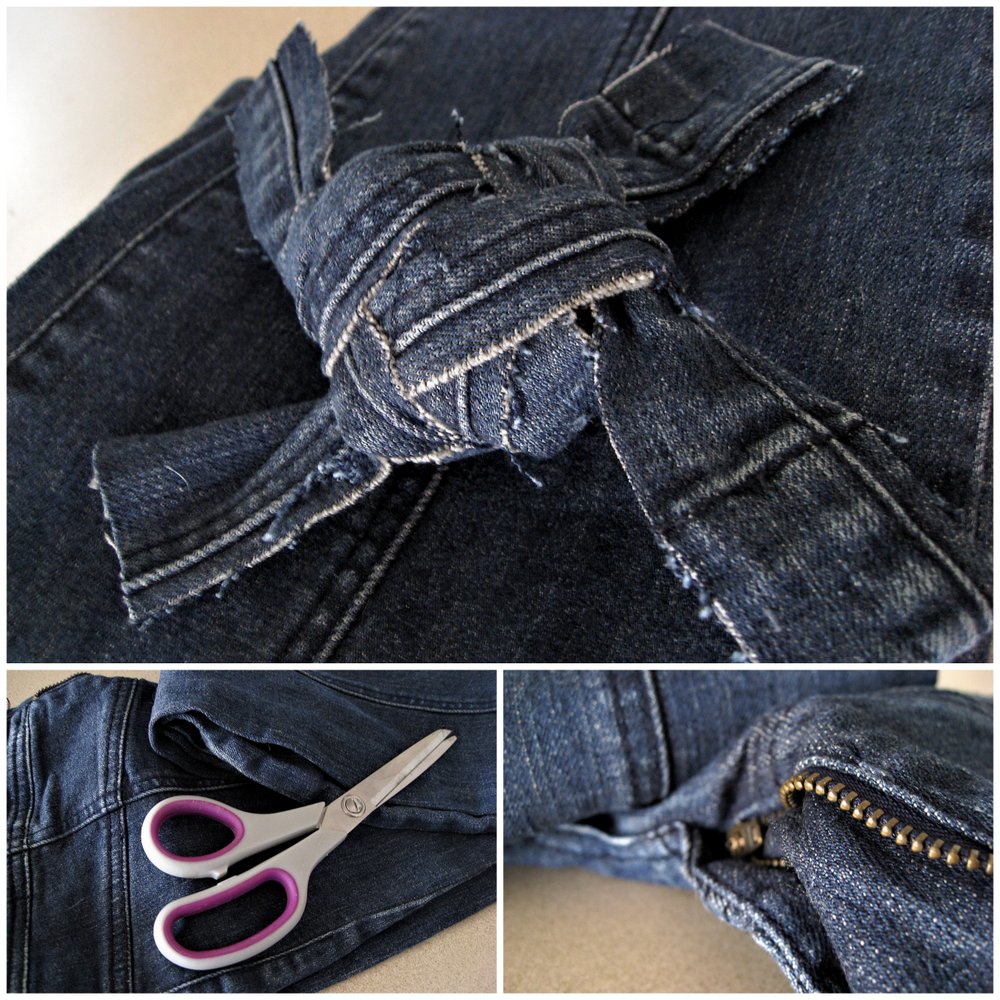
Cut two extra long (leg length) strips of denim from a leg of your recyclable jeans. My strips were approximately 4cm wide and I purposefully chose to include the rugged seams for extra fun toy texture and durability.  Lay the two strips in a cross (one strip horizontal and one vertical, crossed in the missed) and then "box weave" or "box braid" as follows.  WARNING: Reading the following may mess with your mind unless you have strands.  It is hard to visualise, but oh-so-easy one you understand through a little trial and error. 
    • Flip the left cross of the horizontal strand over the vertical strip to create loop one.
    • Flip the top cross of the vertical strand over the upper fold of the horizontal strip to create loop two. Confused?  See the upper right of the collage below for a messy but functional visual.
    • Flip the original right cross of the horizontal strand back across both verticals to create loop three.  
    • At this stage, you may have to tidy up your strands so that the strand that you just positioned is on the bottom of the "square" that you are building to make sure that you don't get lost for the final loop!
    • Double the original bottom cross of the vertical strand over the horizontal strand that you just tidied into bottom position (forming loop four) and then pull up through loop one.  
    • The stands should now look like a woven square (lower left of the collage below).  Don't worry, Fido and Fluffy won't judge if you didn't get it right.  
    • Carefully and evenly pull tight. It will now look like a messy knot... not to worry!  That first one was just for practice!
    • Flip over and repeat, watching your denim "ball" slowly take shape.  If you wish, take extra care on the final layers to twist the denim for an attractive finish.  Be sure to leave a few tempting ends for your pampered pup to carry and grip.
    • Didn't turn out quite as pretty as you had hoped? No worries! Just grab your scissors and try again.  After all, two dog toys are double the fun of one!


    Find more fur-friendly DIYs in my recent Six for Saturday (or Sunday) post and my growing Pet Craft board on my Pinterest.  If you stumbled across this while hunting for denim DIYs, then (after exploring a little of course - welcome to Creativity Unmasked!) try my Jean-ious Pinterest board instead.  Happy creating!

    Note: Always make sure you know your dog before giving him or her any new toy.  Some dogs would rather eat their toys than rip them apart for joy, making many of the fun toys made (whether handcrafted or storbought) from fabric, robe, etc a risky choice for Rover.

    creativityunmasked.blogspot.com

    Thursday, July 18, 2013

    Photo Log Thursday - Chickens

     
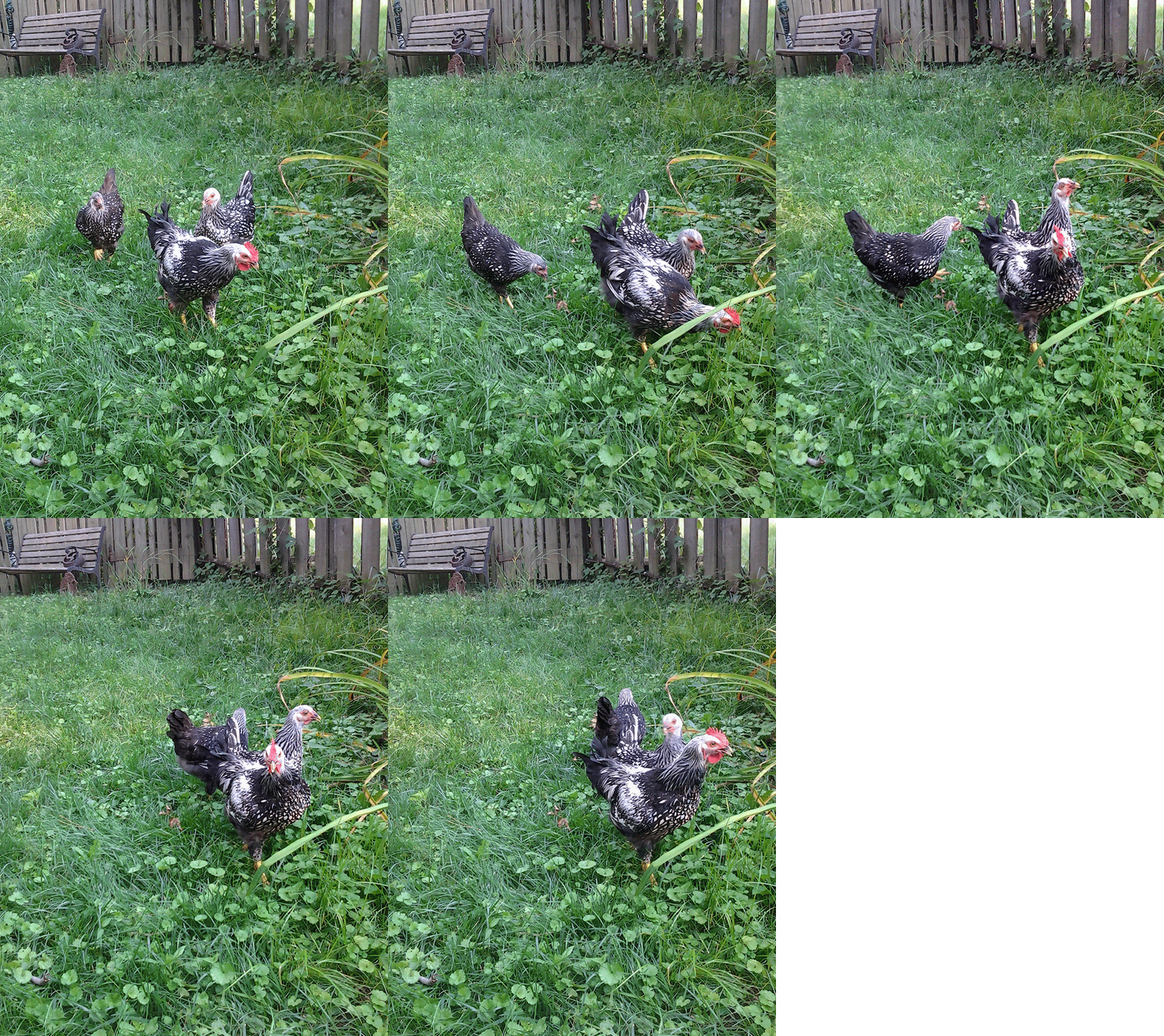
    Check out the New Girls in the coop


    This was the first go at the New Girls free ranging in the back yard. 


     The weather was rather hot and with high humidity all the dog seem to melt
     
    Blackberries in the garden are coming along nicely, let's hope the birds don't eat them all.  


    We made a new table banner.  Coco is always ready to play ball
    The older girls checking out the patio


    The END 
    So that was our week in photos.
    Let's hope I can remember to take my camera with me on more occasions. 


    July 17 2013 Recipe Wednesday

    July 17 Recipe Wednesday

     
    Where do recipes come from?  Who makes them up? Why do we collect them? 

    We'll  have some fun trying to answer these questions.

    Today we will start with our first Dog Treat Recipe. 
    This recipe was given to me by a friend in California as a gift for our dogs at Christmas.

    Very simple to make but not nothing very interesting about it. 

    Basic Dog Treat
    Ingredients
    3 Cups all-purpose flour
    1/2 Cup nonfat dry milk
    1/2 Tsp. baking powder
    1/2 Tsp salt
    13 Cup Low-sodium beef or chicken bouillon powder
    2 Large eggs
    1 Cup warm water

    Directions
    1- Preheat oven to 350 degrees
    2- Mix all dry ingredients in a large bowl.  Slowly add the warm water and eggs and mix well.  
    The dough  will be stiff
    3- Use hands to knead the dough until it is smooth and easy to handle, and then form into a ball.
    4- Place the ball on a floured breadboard.  Roll the dough out to 1/4 to 3/8 inches thick.
    5- Use a 3 inch dog bone cookie cutter or cut the dough into 3 x 2 rectangles
    6- Place the bones on greased cookie sheets.
    7- Bake for 15 to 20 minutes or until golden brown.
    8- Take the cookie sheet out of the oven, and using a spatula, flip the bones over.  Return to the oven for 5 minutes or until the bones are golden brown on both sides.
    9- Remove from the oven, let cool thoroughly, and store in an airtight container

    It was all good and well for the dogs but they got bored after a few weeks and would sniff them and walk away. So it was time to start looking for other recipes.
    Whenever we were out and about I would look for a Dog Treat Cookbooks.
    We knew of 3 Dog Bakery and visited them a few times on our outings. Our dogs loved the the fancy treats we would bring home. The 3 Dog Bakery book were the first doggy cookbook I purchased from our local shelter.
    Loved the recipes, but they seemed too exotic for our girls: fruit cocktail, coconut and honey (to me at the time, they were weird ingredients).  Some of the ingredients were hard to find or expensive.  (I started to make dog treats due to the store-bought treats' cost, and what was in them that I could not pronounce.) So my search for more books continued.  After adding two more books to my collection, I had some idea of  what the basic recipes were and how to manipulate them.  (More flour if you add more liquid, like honey or molasses.)

    So we added peanut butter to the above recipe and deleted the bouillon, added wheat flour and chicken stock as the liquid. Soon our dogs were snacking on things like
     Italian Twist: treats made with tomato soup, cheese and parsley.


    Cocoa Kittys, made with carob powder and dried mint.

    Peanut Butter treats, of course.
    Sorry, no photo. There are never any left to take a photo of.)

    So that is how we started creating our own dog treats.
    One simple recipe from a company that sold dog bone shaped cookie cutters as a Christmas gift.
    I will always cherish this recipe not only because it was given by a wonderful friend but
    for what  it began. Our wonderful journey known as MaiRo & Co - Dog Treat Bakery.

    Till next week.
    Woof!


    Sunday, May 5, 2013

    Why is Chocolate bad for Dogs?

    With our NEW line of Carob Covered treats,                                                   we thought it would be nice for you to know why                                       Chocolate is bad for your dog.                                                                         Carob is that good for your dog alternative.   Please Read on.


    I found this very informative  I know chocolate is bad for dogs, it's nice to know a little of they why.
    This comes from a Facebook Page
    "Dog Town Cincinnati" and they posted it from "Dogster" in a articular called "Ask a Vet" I took the text and a couple of the photos.
    Visit them, they are great pages.

    Just about everyone knows that chocolate is toxic to dogs. (For those of you who don't know: Yes, it is.) But the other day someone asked me why people can eat chocolate without trouble, but when dogs eat chocolate they can die.
    Chocolate causes trouble for dogs in two ways. First, it is poisonous to them. Also, the fatty butter, cream, and nougats often present can cause their pancreases to melt down -- literally, in some cases.
    Chocolate contains two toxins that are closely related. You're familiar with caffeine, and most of us are familiar with theobromine, which is what gives human chocoholics the famous chocolate high.
    Dogs are much more sensitive to these two agents. But sensitivity is not the only factor at play here. Canine chocoholics consume, on average, far more of the stuff than even the most ardent human might. In fact, dogs will generally consume just about any quantity of chocolate they can find (did I mention that dogs really love chocolate?). I have met many a Beagle who has eaten two pounds of dark chocolate bars. That's the equivalent of you eating eight to ten pounds.

    What happens if my dog eats some chocolate? 

    To understand why dogs get in trouble, imagine you're especially sensitive to caffeine and theobromine (I'm talking about the sort of person who is up all night if he drinks a cup of coffee after noon). Now picture eating 10 pounds of dark chocolate. What might happen?
    Everyone who drinks coffee in the morning knows that caffeine stimulates the gastrointestinal tract. It keeps the trains running, so to speak. An overdose of caffeine (and the closely related theobromine) would have the trains running out of control. Diarrhea is a common symptom of chocolate toxicity in dogs.
    If you've ever had too much coffee, you've probably felt jittery and felt like your heart was racing. Our imaginary human chocolate-overdoser is likely to feel the same way. But chocolate consumption may make your dog's situation even worse. Dogs don't just get jittery; they can develop full-blown psychosis and seizures. They also can go into comas. And dogs' hearts develop full-blown arrhythmias, which can lead to cardiac arrest.
    Going back to our imaginary person who has eaten 10 pounds of dark chocolate -- I'd be willing to wager you'd have a world-class bellyache. You'd also be unbelievably thirsty, since chocolate stimulates thirst.
    Canine chocoholics frequently binge on water after their indiscretions, and all that fatty goodness (the butter, cream, nougat, and so forth) can overwhelm the pancreas, which helps to digest food. This can lead to pancreatitis, in which the pancreas begins to digest itself. Severe cases can be life-threatening. Even less severe ones may predispose dogs to diabetes later in life.
    So that's the bad news. Now for the good news. In more than 12 years of treating dogs for chocolate ingestion, I have yet to lose a patient. And I should point out that I have worked as an emergency clinician for the last five years, so I see far more than my fair share of canine chocoholics.
    How is this possible? First, when it comes to toxicity, not all chocolates are created equal.
    The darker the chocolate, the more caffeine and theobromine it contains. White chocolate and milk chocolate aren't terribly toxic; my pal Buster (who weighs 60 pounds) once ate a pound of See's Candies with no adverse effects whatsoever, other than the loss of the candy.
    Next, not every chocolate-consuming dog is a 30-pound Beagle eating two pounds of dark chocolate. Chocolate toxicity depends very heavily on the dose consumed relative to the size of the dog. A lethal dose in a Chihuahua won't touch a Great Dane.
    Also, I am happy to report that most dogs have relatively resilient pancreases. As I mentioned, that pound of See's Candies didn't affect Buster's pancreas at all.
    Finally, chocolate toxicity is treatable. Chocolate is sticky, and it draws fluid into the stomach. Making your dog throw up usually gets most of the toxins out, which also makes treating chocolate ingestion very satisfying for veterinarians.
    I remember one chocolate Lab who consumed several pounds' worth. I called him the Double Chocolate Lab until I got him to vomit, at which point he became the Chocolate Volcano. He went on to enjoy many other adventures in life.
    Intravenous fluids help to eliminate the toxins from the bloodstream of canine chocoholics, and most of the symptoms can be controlled most of the time by veterinarians. As I said: I have yet to lose a patient to chocolate ingestion.
    dog found your stach, now what?

    What should you do if your dog breaks into your chocolate stash?

    First, consult a chocolate toxicity calculator to determine whether you need to do anything at all. I like this National Geographic calculator (which shows that an 11-pound Pug would need to consume 487 ounces of white chocolate, or nearly three times its own weight, to be at risk of death). You can also call your vet or the ASPCA's Animal Poison Control Center
    I do not recommend trying to treat your dog in any way at home, especially in Pugs, Bulldogs,Boston TerriersPekingese, and other short-snouted breeds. The old hydrogen-peroxide trick for inducing vomiting often doesn't work, because the dog's stomach will be too full of fluid for it to be effective, and the peroxide can cause esophagus and stomach ulcers. All dogs, but especially short-snouted ones, are at risk of inhaling vomit. Get your dog to the vet straight away. 
    Finally, be sure to talk to your vet about the treatment plan. If you own a French Bulldog, ask about the safety of making him vomit. And if your dog has consumed a less-than-lethal amount, be sure to ask whether giving him charcoal is necessary. Charcoal is often used to absorb chocolate toxins, but in my experience, the treatment can be more dangerous than the chocolate. 
    Charcoal can cause life-threatening changes in blood salts (hypernatremia, to be exact). Tragically, I have seen one dog die from charcoal treatment, and have seen another dog come very close. (I was not the vet who administered the charcoal to either dog; I reserve charcoal for only the most severe cases.)
    The take-home message is simple. Chocolate is toxic to dogs, but chocolate ingestion is not always a catastrophe. Exercise caution and common sense, and don't try to treat at home.
    And above all, save the chocolate for yourself.
    Got a question for Dr. Barchas? Ask our vet in the comments below and you might be featured in an upcoming column.
    (Note that if you have an emergency situation, please see your own vet immediately!)


    Friday, April 26, 2013

    Our Website


    This is the opening of our website.

    I have learned so much about how to create and implement a website, and I am tired.
    Thanks for understanding all the unusual changes being made to the site in the past year and half
    But now I think we have it down and it should not change much in the future.
    Stephen, Robert & Pluto. Best Friends.

    We have are same "About Us" page, great photos of the treats and all the info folks want to know
    about our treats.


    We have upgraded to a new Shopping cart.Click and drag to change the order
    Which allows us to give you more options in product, how to pay, and in Shipping.
    No more limited options.

    Shipping is now "REAL-TIME"  So now you can see an accurate cost to ship your product to your address.

    This I believe was a big hold up for folks wanting to try our treats but the shipping was costly.
    Not using Zones to determine your postal rate, 
    which could be more or less than the actual shipping. So you will not be overcharged and 
    we will not lose money on the shipping cost.

    Shipping cost can be high on the first pound, but after that it's not that much more for added pounds.
    ( I wish eating was that way.)

    We not only have our Website: MaiRoAndCo.com but have added a Mobile link and Facebook Page Store.
    Our Facebook Fan Page has all the great treats we offer. So no more switching back and forth to what's new or different.  Check for discounts you never know what we will offer you.
    ETSY.com store is always open too.

    Coming soon we will be adding a Wholesale Page for those who wish to sell MaiRo & Co Dog Treats in there shops.

    Thanks for making our business a success.


    Powered By Blogger